Signed in as:
filler@godaddy.com
At the center of Marian Coffin’s design for Gibraltar is the Formal Flower Garden. From this level space, the larger garden unfolds up the hillside toward the Mansion and outward into the surrounding garden rooms. Today, it is also one of the first spaces visitors encounter when entering from the garden parking area.
The garden combines strong formal structure with abundant planting. Flower beds are arranged around a central lawn, framed by stone paths, evergreen hedges, sculpture, and the Venus Bathing fountain. Coffin’s carefully ordered design creates a sense of symmetry and enclosure while allowing the flowers themselves to provide color, movement, and seasonal change.
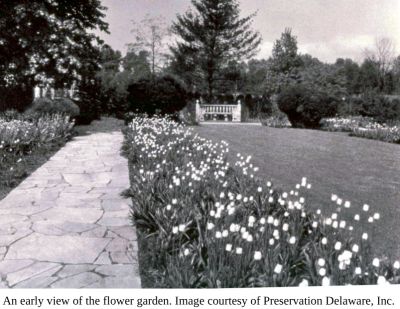
Marian Coffin approached color as an important part of the garden’s overall design. Rather than simply filling the beds with attractive flowers, she developed distinct color schemes for individual beds and coordinated them with neighboring plantings so that the garden worked as a whole.
Historic planting plans and plant lists continue to inform the garden today. While changing conditions, plant availability, maintenance needs, and modern horticultural practices make an exact recreation impractical, the current plantings draw inspiration from Coffin’s original approach, using masses of color, repeated plants, and complementary combinations within the formal framework she created.

Sculpture provides important focal points throughout the Formal Flower Garden. At its center is the working Venus Bathing fountain, reinforcing the garden’s strong central axis.
On the east side of the garden are two small figures known as putti, a classical decorative motif frequently used in Italian and Renaissance-inspired gardens. Each baby-like figure sits atop a sphere and holds a basket overflowing with fruit and flowers, traditional symbols of abundance and renewal. Marian Coffin included the pair in her original 1916 plan for the garden, although research suggests the sculptures themselves were not installed until the late 1920s or around 1930. Their maker and exact origin remain unknown.
One of the pair is now badly damaged, while the other remains largely intact, making them a visible reminder of both Coffin’s original vision and the garden’s long and sometimes difficult history.
